Reporting and Measurement
We research, design and build solutions that explore the future of advertising reporting and measurement.
From unified reporting and conversational analytics to outcome-based measurement and AI systems that can feed data and insights back into planning and optimisation.

Building the future of advertising reporting and measurement
Advertising generates enormous amounts of performance data, but turning that data into a clear understanding of what worked, why it worked and what to do next remains difficult.
Results are often fragmented across platforms and channels, reporting requires significant manual effort, and traditional metrics don’t always show the true impact advertising has on business outcomes.
Advances in data, measurement technology, and AI are creating opportunities to change this.
arrow_circle_right THE ROLE OF REPORTING & MEASUREMENT
What is the role of reporting and measurement?
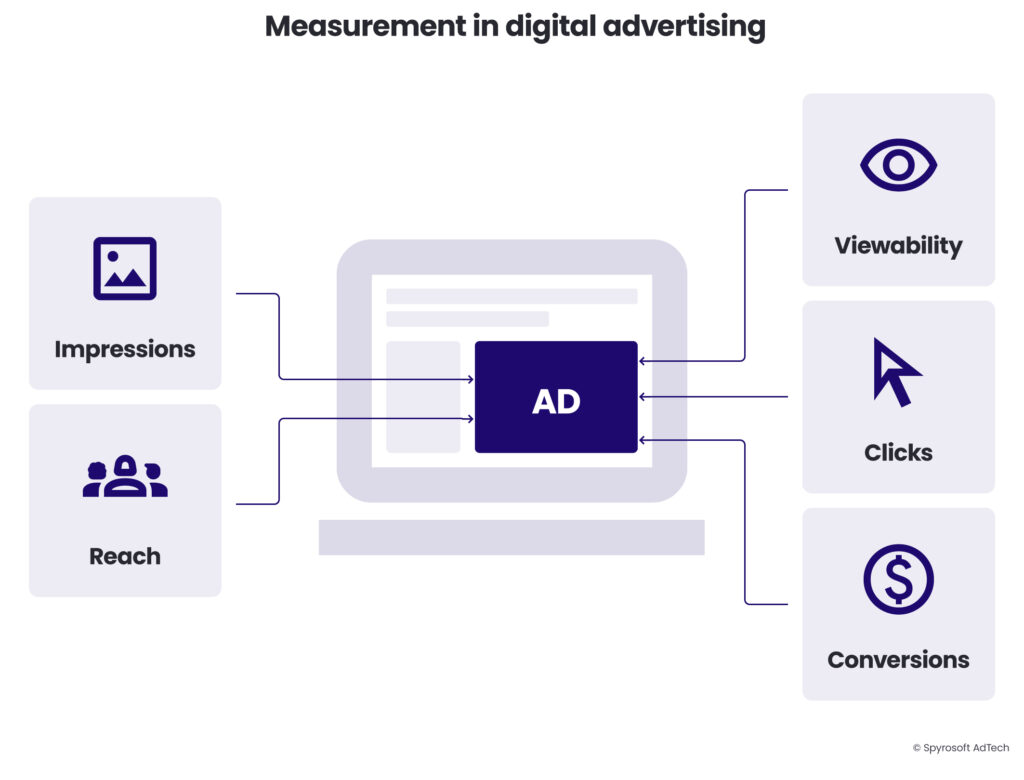
Reporting and measurement help advertisers understand how campaigns are performing and whether advertising is achieving its intended objectives.
Reporting brings together metrics such as:
- Impressions and reach
- Clicks and conversions
- Spend and revenue
Measurement goes further by assessing the impact and effectiveness of advertising.
arrow_circle_right THE FUTURE OF REPORTING & MEASUREMENT
Reporting and measurement are becoming outcomes-focused
Advertising reporting has traditionally focused on collecting campaign metrics and presenting them through dashboards, spreadsheets and periodic reports.
As advertising becomes more fragmented across channels and platforms, understanding overall performance and the influence on real business outcomes has become increasingly complex.
Unified cross-channel reporting
Campaign data is often spread across DSPs, social platforms, retail media networks, ad servers and other systems. Bringing this data into a common reporting layer can provide a more consistent view of spend, delivery and performance across channels.
Automated data collection and reporting
APIs and automated data pipelines can replace manual exports, spreadsheet consolidation and repetitive report creation. This allows reporting teams to spend less time preparing data and more time interpreting it.
Conversational analytics
Generative AI can change how people interact with advertising data. Instead of navigating dashboards or building queries, users can ask questions in natural language, investigate performance and explore the underlying data conversationally.
From dashboards to AI-generated insights
AI can help identify patterns, anomalies and relationships within campaign data and explain them in accessible language. Reporting systems can evolve from displaying metrics to proactively surfacing insights, potential causes and areas that warrant further investigation.
Measuring business outcomes
Advertisers increasingly want to understand advertising performance in terms of sales, revenue, customer acquisition and other business outcomes. Connecting advertising data with customer, transaction and measurement data can help establish a clearer relationship between media activity and these outcomes.
Understanding incrementality
Conversions that occur after an ad interaction do not necessarily mean the advertising caused them. Incrementality approaches can help estimate the additional outcomes generated by advertising compared with what would likely have happened without the campaign.
Closing the loop between measurement and optimisation
The longer-term opportunity is to make measurement part of a continuous feedback loop. Insights from campaign performance and business outcomes can feed back into planning and buying systems, helping inform future audiences, channel selection, budget allocation and optimisation decisions.
Looking for reporting and measurement solutions?
Get in contact with our team and find out how we can help you.
arrow_circle_right OUR APPROACH
How we approach designing and building reporting and measurement solutions
01. Research
We research and explore the problem, use cases, opportunities, and technical challenges to define what a potential solution could look like and how it could fit into the wider AdTech ecosystem.
02. High-fidelity prototype
We turn the concept into a realistic user experience by creating a high-fidelity prototype.
The goal of the prototype is to illustrate workflows, interfaces, and functionality and showcase the vision of the reporting and measurement solution to stakeholders and prepare for development.

03. Proof of concept (PoC)
We build and test the parts of the solution that carry the greatest technical uncertainty, such as:
- Integrating data from multiple advertising platforms
- Standardising metrics
- Connecting advertising with business outcomes
- Applying measurement methodologies
- Enabling AI to analyse and interrogate campaign data

04. Minimum viable product (MVP)
We develop a working MVP of the reporting and measurement solution for testing with initial users.
Sometimes the MVP stage will be an evolution of the previous stages, other times it’ll be the starting point.

arrow_circle_right CASE STUDIES
Examples of development projects we’ve worked on



arrow_circle_rightContact us
Looking for reporting and measurement solutions?
Get in contact with our team and find out how we can help you.

Radosław Kostecki
Business Unit Director