The Rent vs Build vs Buy Dilemma in AdTech

Creating an advertising business, whether you’re a tech vendor or retailer, requires making various strategic decisions.
One of the key decisions is around how you’ll use and operate the tech that will power your advertising business.
Most companies only know one option: use a piece of software that already exists on the market.
While this option makes sense, especially at the beginning, there are two other options that can offer more advantages and opportunities for growth.
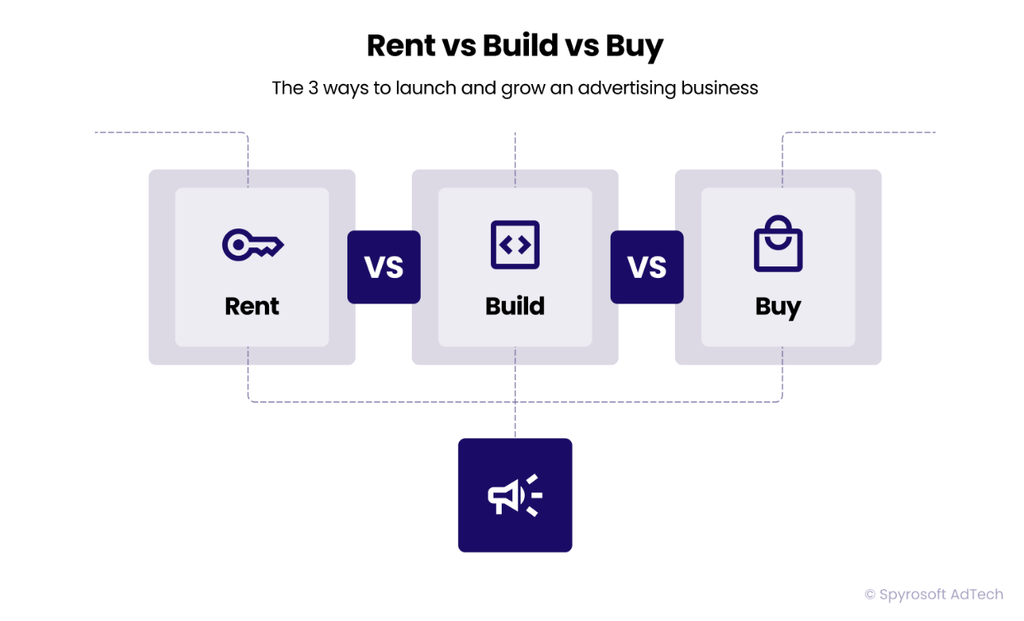
In this article, we’ll introduce the three main options companies have when launching and growing an advertising business.
This is part one of a series of articles about the rent vs build vs buy dilemma in AdTech.
What does it mean to rent, build, or buy an AdTech platform?
When it comes to launching and growing an advertising business, companies have three main options. They can:
- Rent an existing advertising platform from a third-party vendor
- Build their own advertising platform
- Buy an existing technology product or business
Each approach differs in terms of cost, ownership, control, flexibility, and the resources required to operate and maintain the technology.
And more importantly, the right approach depends on where the company is in their growth phase.
Renting an AdTech platform
Renting involves using an AdTech platform owned and operated by a third-party vendor.
Rather than developing the technology themselves, companies pay to access an existing advertising platform, typically through subscription fees, usage-based pricing, or a percentage of advertising spend or revenue.
For example, an advertising agency might use a third-party demand-side platform (DSP) to create, run, and manage programmatic media buying, while a publisher might use an external ad server or supply-side platform (SSP) to monetise its inventory.
MAIN ADVANTAGE: Renting generally allows companies to access established technology quickly, without having to invest in software development, infrastructure, or ongoing platform maintenance.
MAIN DRAWBACK: Companies are dependent on the vendor’s technology, pricing, product roadmap, and ability to meet their requirements.
Building an AdTech platform
Building involves developing a custom AdTech platform designed around a company’s specific business goals and technical requirements.
Companies can build technology using their internal engineering teams, work with an external software development partner, or combine both approaches.
For example, an AdTech vendor might develop its own DSP or SSP to extend its product offering, while a retailer might build a custom retail media network (RMN) that integrates directly with its ecommerce systems, customer data, and advertising inventory.
MAIN ADVANTAGE: Complete ownership and control over the technology, including its features, integrations, architecture, and development roadmap.
MAIN DRAWBACK: Developing and maintaining custom AdTech requires an investment in software engineering, infrastructure, and specialised advertising technology expertise.
Buying an AdTech platform
Buying involves acquiring an existing AdTech company, including its underlying technology, intellectual property, and customer base.
Unlike renting, where companies pay to access technology owned by another vendor, buying can give companies ownership of an established platform without having to develop it entirely from scratch.
For example, a media company might acquire an AdTech vendor to launch its advertising business, while an established AdTech company might purchase a smaller technology provider to expand its product offering and customer base.
MAIN ADVANTAGE: Buying can provide access to existing technology, customers, intellectual property, and technical expertise.
MAIN DISADVANTAGE: Acquiring a platform can require significant upfront capital, and the buyer may need to invest additional resources in modernising and maintaining the technology. There are also other challenges that arise when acquiring an AdTech platform, such as managing technical debt and integrations. Also, the time it takes for the acquisition to go through can take many months, meaning you can’t take advantage of the acquisition straightaway.
Why is renting vs building vs buying a dilemma in AdTech?
Choosing whether to rent, build, or buy an AdTech platform is a dilemma because there is no single approach that works for every company or situation. Each approach offers its own advantages and drawbacks, meaning there often isn’t a clear winner.
The decision to rent, build, or buy is also a strategic one, so it needs to align with your current situation, business objective, long-term goals, and strategic vision.
Renting provides access to established technology without the cost and complexity of developing it, but often comes with limitations around customisation, integration, pricing, and control.
Building gives companies greater ownership and control over their technology, but requires investment in development, infrastructure, maintenance, and specialised AdTech expertise.
Buying an existing platform can provide a faster route to technology ownership, but acquisitions can be expensive, risky, and may introduce integration challenges, technical debt, and ongoing maintenance costs.
The challenge is finding the right balance between cost, control, flexibility, and long-term business value.
Companies must also consider whether owning the technology will provide a meaningful competitive advantage or whether their resources would be better spent on other parts of the business.
Ultimately, the decision isn’t simply about which option is cheaper or faster.
It’s largely about deciding which parts of the AdTech stack are strategically important enough to own and which are better sourced from third-party vendors.
FAQ
Companies looking to launch or grow an advertising business have three main options: rent, build, or buy an AdTech platform. Renting means using technology provided by a third-party vendor. Building involves developing a custom platform to meet specific business requirements. Buying means acquiring an existing AdTech company or technology product, including its intellectual property and potentially its customer base.
Renting an AdTech platform allows companies to access established technology without investing in software development, infrastructure, or ongoing maintenance. It can be a cost-effective and faster way to launch an advertising business. However, companies may have less control over the platform’s features, integrations, pricing, and product roadmap.
Neither option is universally better. Building an AdTech platform offers greater ownership, control, and flexibility, allowing companies to develop technology around their specific business needs. Buying an existing platform can provide access to established technology, intellectual property, customers, and technical expertise without starting from scratch. The right choice depends on available resources, business objectives, budget, and long-term strategy.
The decision should be based on a company’s current stage of growth, business objectives, available resources, and long-term ambitions. Companies should evaluate the costs, level of control, flexibility, technical expertise, and maintenance requirements associated with each option. They should also consider which parts of their AdTech stack are strategically important enough to own and which can be sourced from third-party vendors.