Agentic AI in AdTech: What It Changes in Programmatic Advertising
Since its beginnings in the mid-1990s, programmatic advertising has helped advertisers and publishers run campaigns at scale by automating many of the processes involved in buying, selling, and measuring ads.
As artificial intelligence continues to develop, the industry is starting to explore a new stage of automation in the form of agentic AI.
As discussed in the first article in this series, agentic systems are designed to analyse situations, decide what actions to take, and work toward defined goals with limited human input.
If we look at agentic AI from a programmatic-advertising lens, then this means AI systems could help create, launch, and manage campaigns across multiple platforms without teams needing to configure every step manually.
In this article, we examine how programmatic advertising currently works, what changes agentic AI brings, what it doesn’t change, and the challenges it faces in being adopted into programmatic advertising processes and workflows.
A brief history of programmatic advertising
Back in the early days of online advertising, most of the key processes were carried out manually.
Media deals between an advertiser and a publisher were negotiated manually, and the actual placement of ads on a website was done by people.
The introduction of ad servers in the mid- to late-1990s introduced the first wave of automated advertising platforms and signalled the beginning of programmatic advertising.
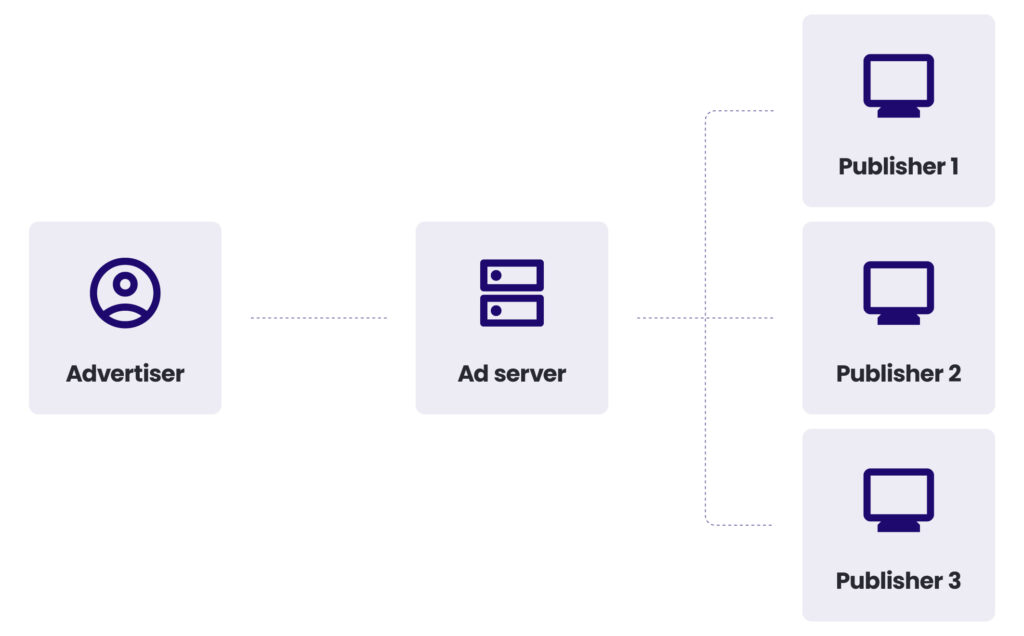
Ad servers were developed to automate the process of displaying ads on websites.
The premise of programmatic advertising was to use software and data to automate the buying, selling, measurement, and optimisation of digital advertising.
Over the following years, new technologies such as demand-side platforms (DSPs), ad exchanges, and supply-side platforms (SSPs) emerged to automate the buying and selling of digital media across multiple advertisers and publishers (websites).
Processes like real-time bidding (RTB) made it possible to buy and sell impressions automatically in milliseconds.

Real-time bidding (RTB) allows advertisers – via DSPs — and publishers – via SSPs – to trade digital media via auctions that last around 100 milliseconds.
Together, these tools helped advertisers and publishers reduce manual work and run campaigns more efficiently.
How programmatic advertising works today
Modern programmatic advertising continues with the original premise by automating the buying and selling of digital ads and improving campaign performance.
Just like in the early days of online advertising, direct IOs and various programmatic advertising media-buying processes, like real-time bidding (RTB), are still prominent.
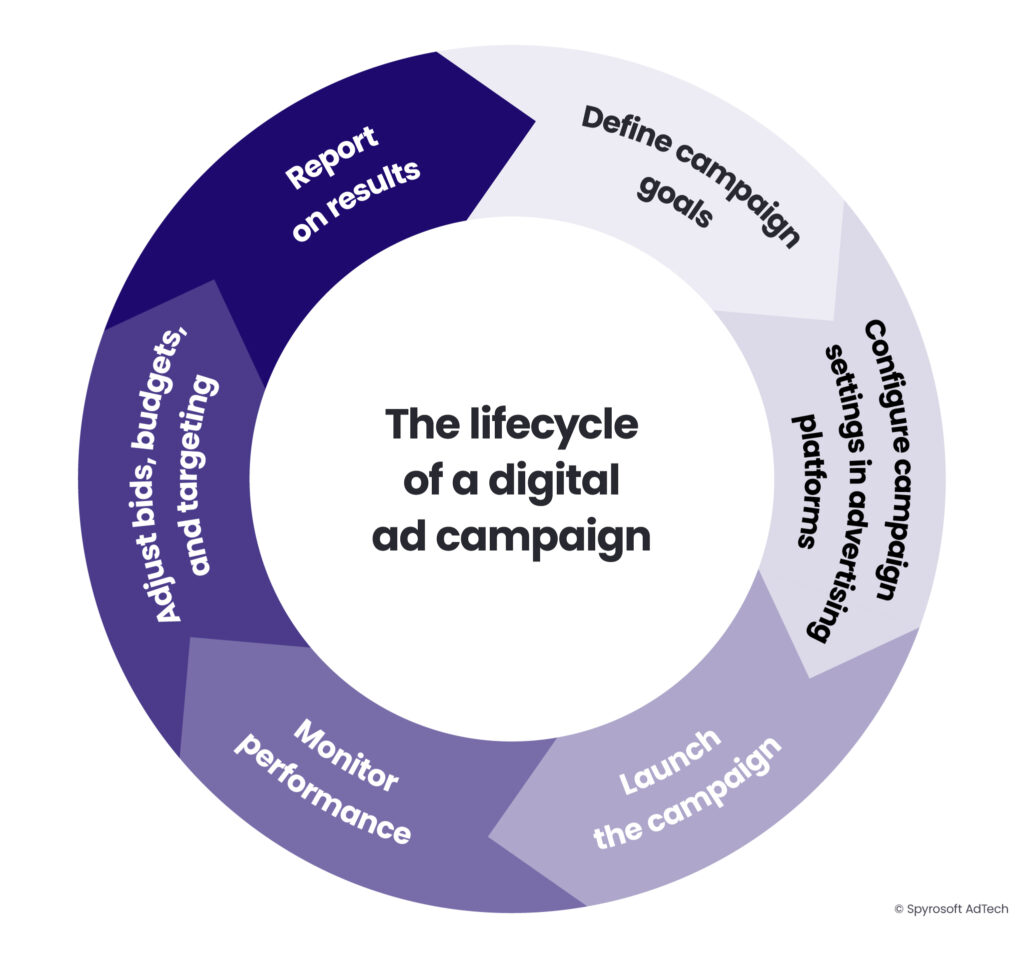
When launching a campaign today, advertisers typically:
- Define campaign goals
- Configure campaign settings in platforms such as DSPs
- Launch the campaign
- Monitor performance
- Adjust bids, budgets, and targeting
- Report on results
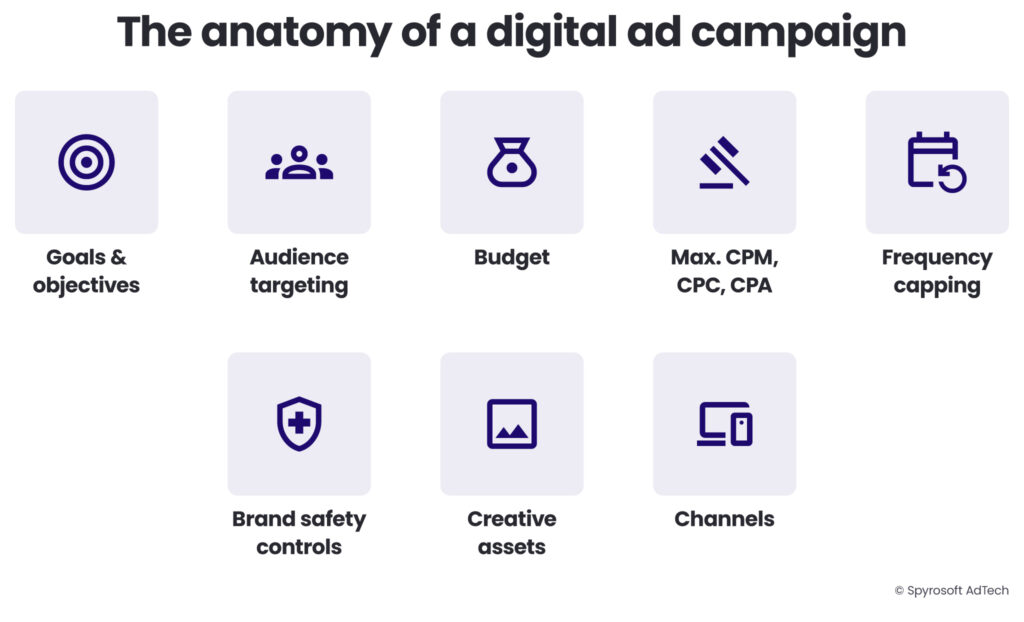
To guide the campaign, advertisers specify details such as:
- The goals and objectives they want to achieve.
- The audiences they want to reach
- The total campaign budget
- The maximum bid per impression, click, or action
- Frequency caps to avoid overexposure
- Brand safety controls
- What the creative should look like
- The channels where the ads should appear
Once the campaign starts, the platform automatically buys available inventory that matches those criteria.
From that point on, the system follows the instructions it has been given. It can process real-time bidding (RTB) auctions at huge scale and apply optimisation features such as bid adjustments or pacing controls.
However, the overall direction of the campaign still comes from people. Advertisers review performance, decide what needs to change, and update the settings in the ad platform.
Programmatic advertising today is therefore highly automated, but not fully independent.
How agentic AI differs from current programmatic advertising
Current programmatic advertising systems follow instructions that people configure in advance.
Agentic AI systems, by contrast, operate from objectives.
Instead of defining every rule that controls a campaign, advertisers define what success looks like and allow the system to work towards that outcome.
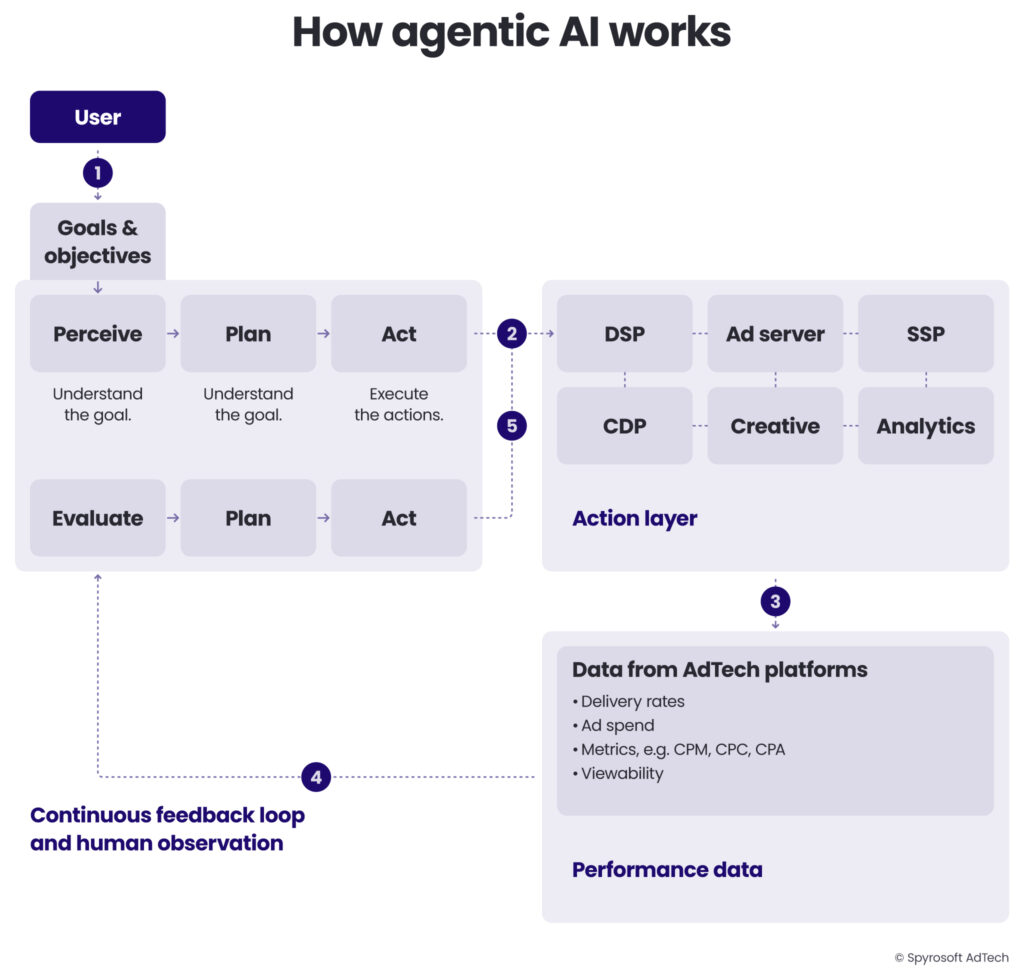
In a programmatic environment, agentic AI could:
- Pursue goals such as maximising conversions or maintaining brand suitability
- Analyse performance and contextual signals as campaigns run
- Adjust bidding and targeting continuously
- Learn from results across channels and platforms
This represents a shift from configuring campaigns step by step to managing them through goals and feedback.
What does agentic AI change in programmatic advertising?
The main change agentic AI introduces lies in how decisions are made, how campaigns are optimisated, and how signals are received.
Decision-making
In most campaigns today, people set the rules and the platform executes them. When results change, teams review the data and adjust the settings.
With agentic AI, the system can take a more active role. It monitors performance, identifies potential improvements, and makes adjustments within the goals defined by the advertiser.
Humans still set the objectives and limits, but the system can manage many of the day-to-day changes.
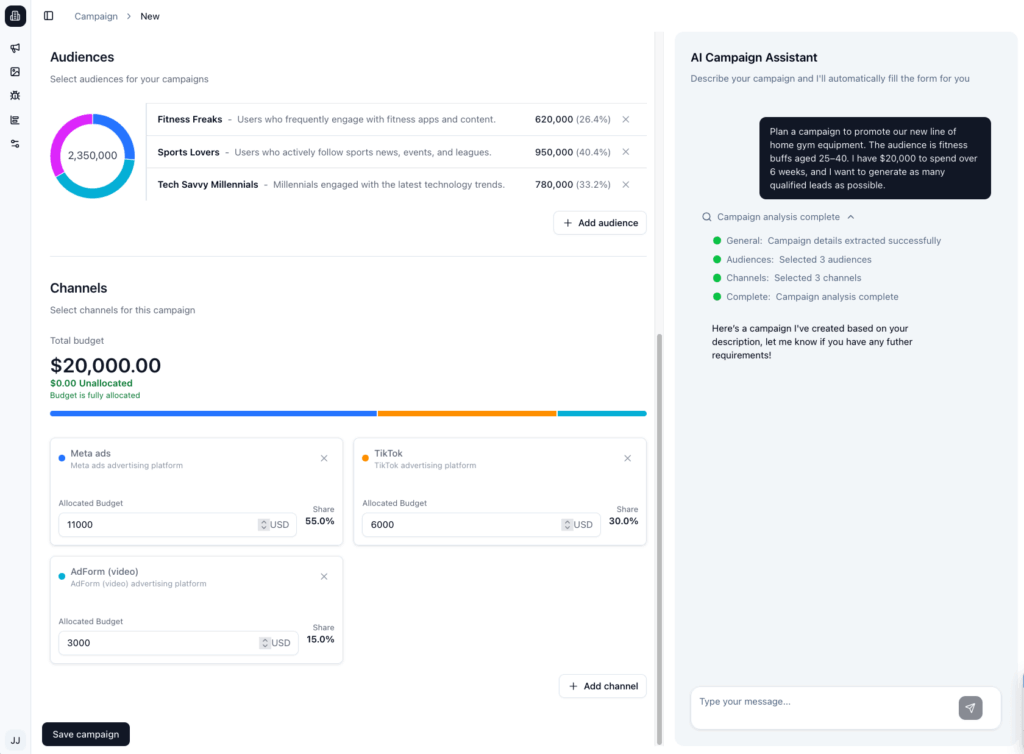
An example of agentic AI for creating media plans.
Source: Spyrosoft AdTech’s AI Media Planner
Optimisation
Traditional programmatic campaigns are often reviewed at regular intervals throughout the day or week.
Agentic systems can react as conditions change. If delivery slows or performance drops, the system can investigate and respond immediately rather than waiting for a manual review.
Coordinating multiple signals
Agentic AI can also consider information from multiple platforms at once.
Instead of adjusting one setting at a time, it can evaluate audiences, creatives, bids, budgets, and supply paths together.
Over time, it learns which combinations produce the best results and adjusts campaigns accordingly. This allows decisions to be made across the entire campaign rather than within isolated platforms.
What agentic AI doesn’t change
Although agentic AI introduces a number of changes to how advertising campaigns run, what changes is the nature of the work.
Instead of making every adjustment manually, people focus more on guiding and supervising how campaigns run.
The strategic direction of ad campaigns
Even with more automation, the direction of advertising campaigns still comes from people.
Advertisers define the goals, decide which audiences to reach, set budgets, and determine how success will be measured. Agentic systems work within these boundaries.
Human judgement
Campaign decisions often involve brand considerations, market knowledge, and business priorities that go beyond performance data alone.
Oversight will also continue to play a role. Teams will still review campaigns and ensure systems are operating as expected.
Is agentic AI a replacement for programmatic advertising?
Agentic AI is not a replacement for programmatic advertising.
Instead, it builds upon the systems already in place.
The goal is to reduce repetitive work and make campaign management more efficient for advertisers and publishers.
Programmatic platforms would still handle buying, selling, and delivering ads. Agentic systems would help manage how campaigns operate across those platforms.
Will the industry adopt agentic AI?
The key question now is how quickly the industry will adopt agentic AI and develop the infrastructure to support it.
Some major AdTech companies Magnite and PubMatic are already experimenting with agent-based systems within their platforms.
But the growth of agentic AI faces two real challenges: standardisation and adoption.
Programmatic advertising has historically relied on shared protocols to enable interoperability. Agentic systems will require similar coordination around deployment, security, transparency, and performance evaluation.
Standards and frameworks like the Ad Context Protocol (AdCP) and the IAB Tech Lab’s Agentic Real-Time Framework (ARTF) have taken the first steps to creating interteroperable communication between different agentic AI systems and platforms.
Whether the industry will adopt agentic AI, and at what scale, remains to be seen.
As we’ve seen with other standards, frameworks, and initiatives – from the OpenRTB protocol to Curated Audiences – adoption is almost always connected to the potential financial benefits.
The industry will soon get to a point where the question isn’t “should we implement agentic AI into our tech, processes, and workflows?”. It’ll be “how can we see a positive financial return from it?”.